Sapa Day 2

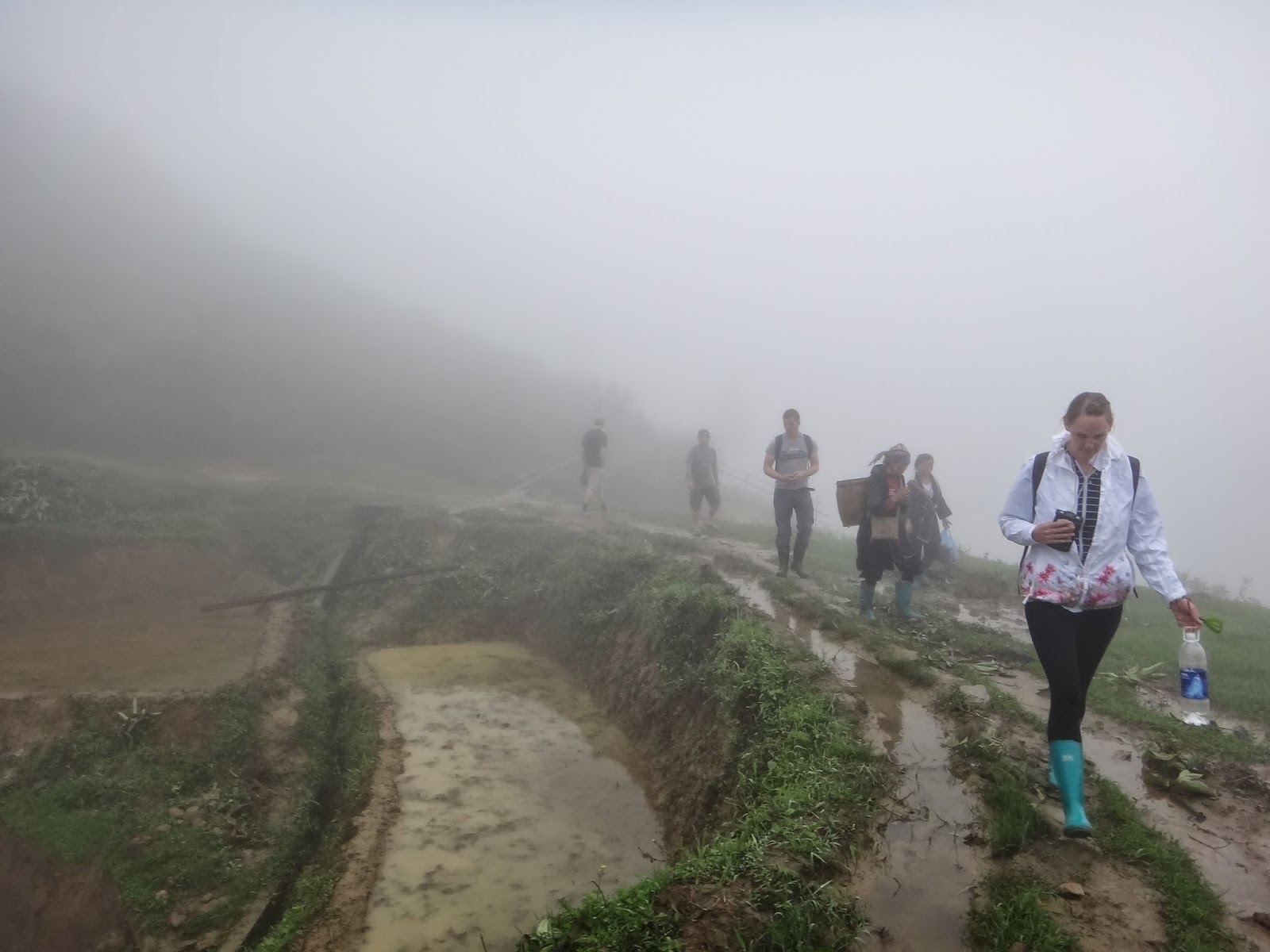
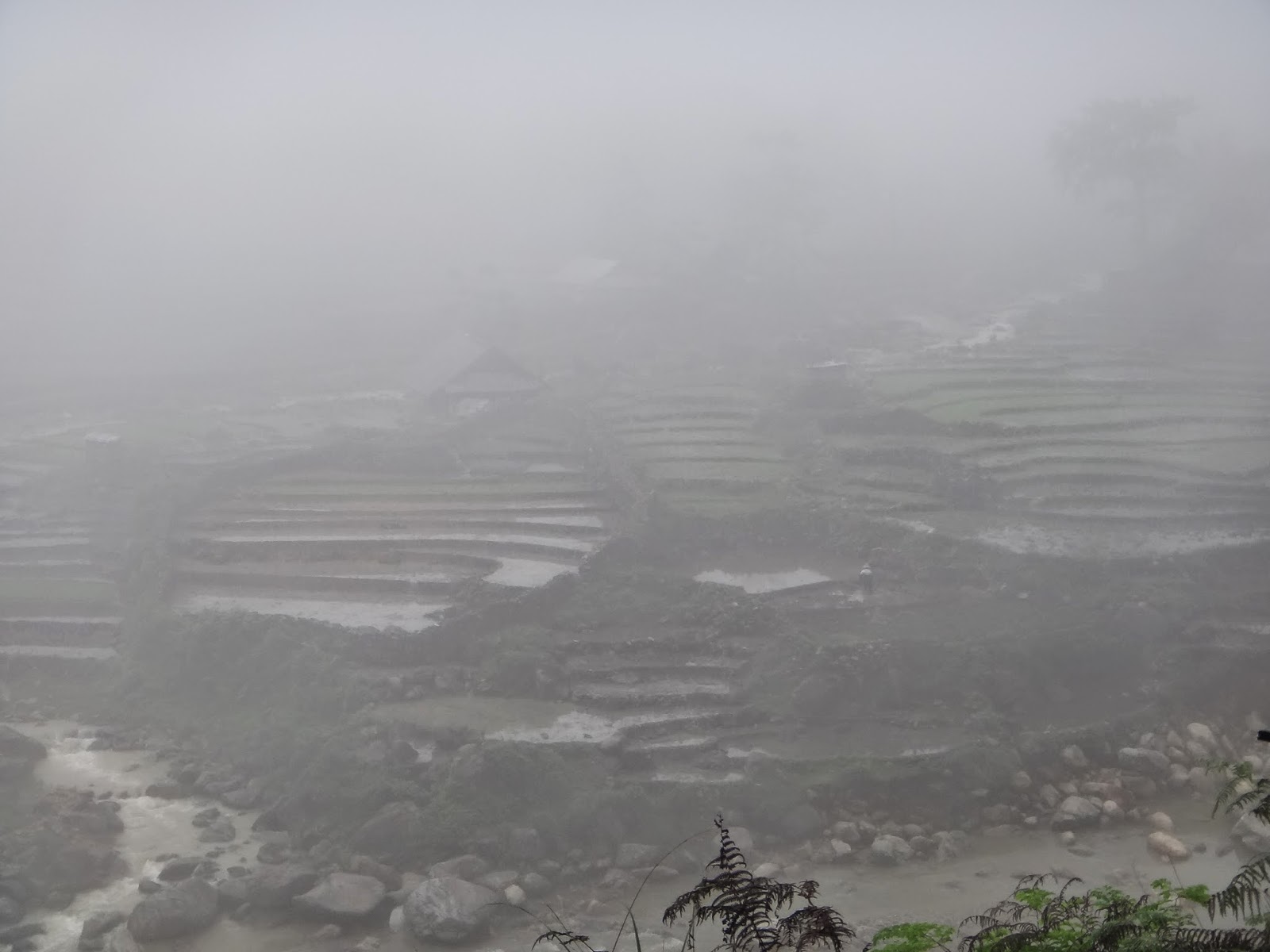
I wasn't too sure what conditions to expect today as I was told we would be trekking twice as long from 9-3pm with lunch in between. Don't be surprise that I actually expected the worse coming from the Indonesia tour, but praise the Lord it was so much better than that! Our same tour guide, Mai, from yesterday led the way again, but today we had more ladies from her tribe tag along as it was a longer tour and one that would eventually lead us to their village. Later we found out the main reason was so they could sell us stuff once we got there, however it was still very pleasant to trek alongside the native people of Sapa and exchange backgrounds and stories. Unfortunately, the weather was mistier and much more foggy than the day before, so in terms of the view, we didn't get to see as much.
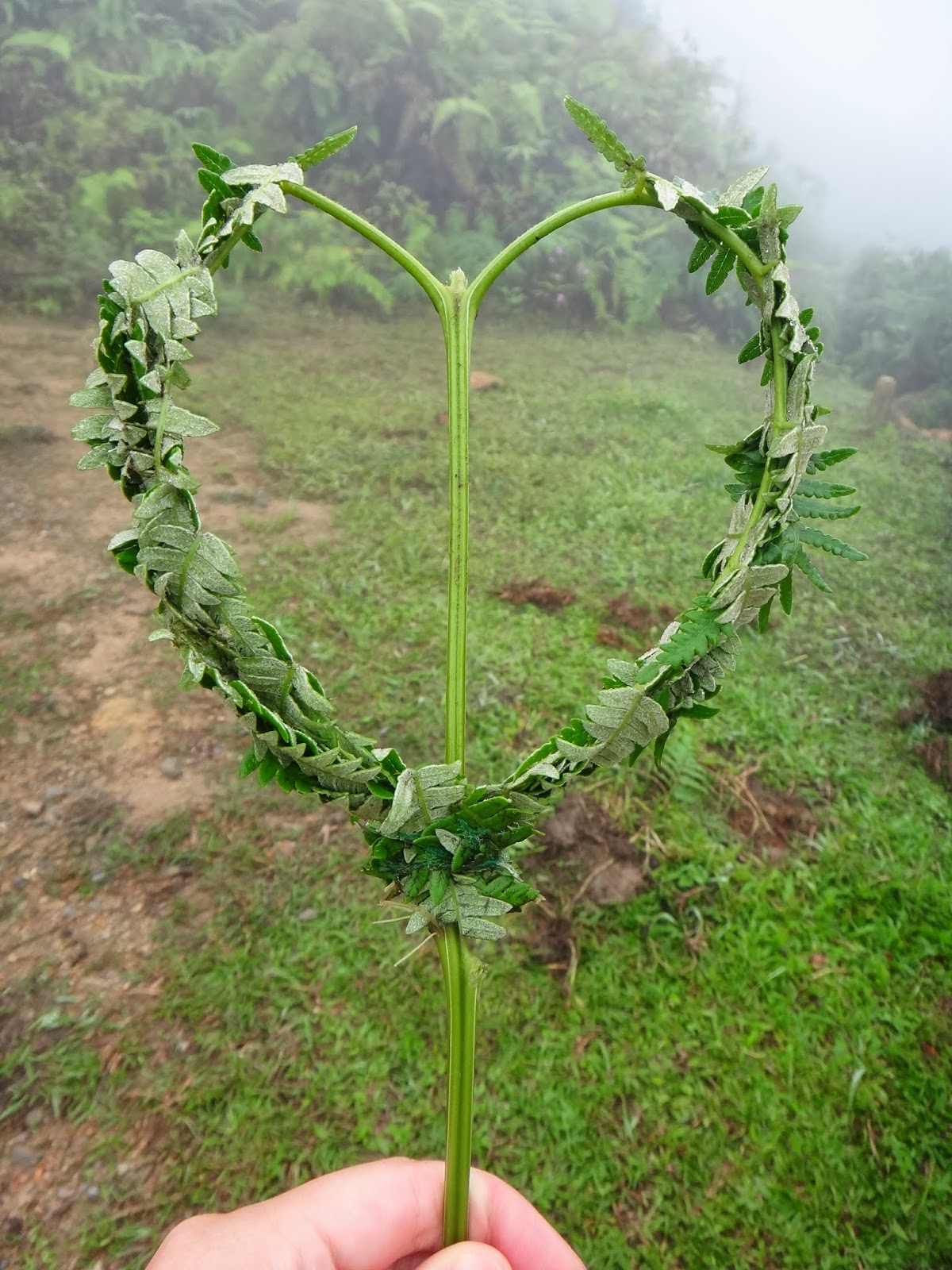
The wonderful ladies made these by hand for us, from leaves!!
We were guided to hike the Muong Hoa Valley and onto many small trails to the Y Linh Ho Village where the Black H'mong Tribe resides. The route was downhill most of the way and for a third of the journey we were walking on paved roads which made it fairly easy. It got challenging as we headed into green pastures and fields as the wet factor made it harder to for us to trek and the mud and soften clay ground made some people from our tour slip and fall easy. A part of the way was also on the edge of  cliff with no railings or anything so our conversations all of a sudden fell silent as we were all heavily concentrated on our next step. Not going to lie, it felt quite dangerous to be trekking like this and I was beyond impress that these ladies were doing so so effortlessly AND with their babies strapped on their backs. They must be use to these conditions or else they are just plain fearless.
It was quite treacherous due to the fog and muddy conditions


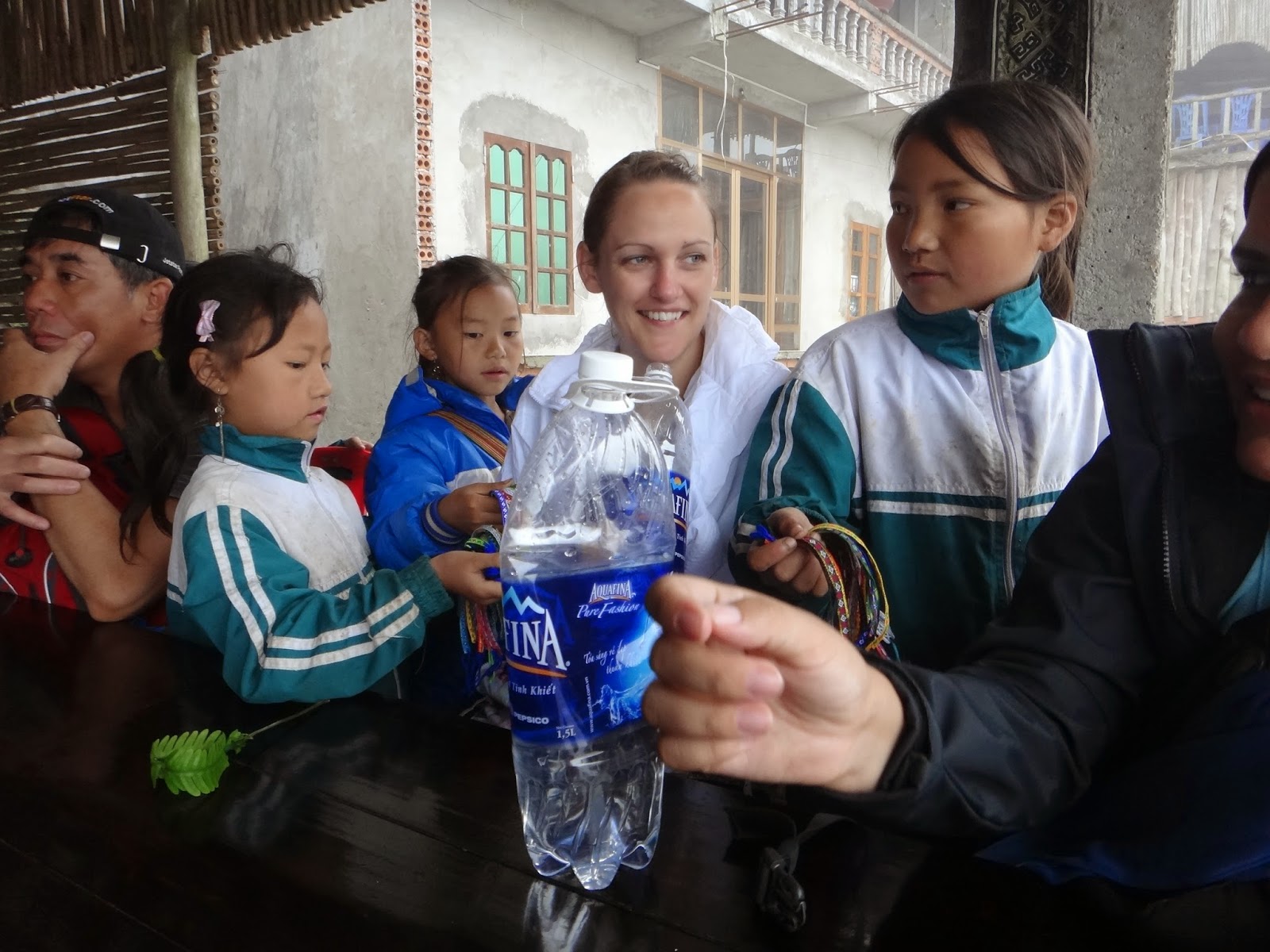
We had a simple lunch at the entrance of Lao Chai Village, but it actually wasn't very pleasant as the village children and ladies kept pestering us to make purchases from them. I bought from one girl who helped me through the trek, but honestly as hard as it is, it's better not to purchase from them here because once you buy from one, you will feel guilty for not buying from another. The children's pestering voices turned into a white noise of chanting to our ears but they eventually moved onto another group of tourists once they realize we weren't going to make any more purchases. We also sited another tribe at this entrance as they were here to meet foreigners and of course try selling us stuff at a later time (they don't do it when the other tribe sells to us-must be a misconduct to do so I assume).

Calling this a humble experience would be an understatement. I was deeply touched by how simple their lives are, yet how happy they were with just what they do have. It reminded me that the simplest things in life are simply the best and that happiness and joy aren't ever found through materialistic means.
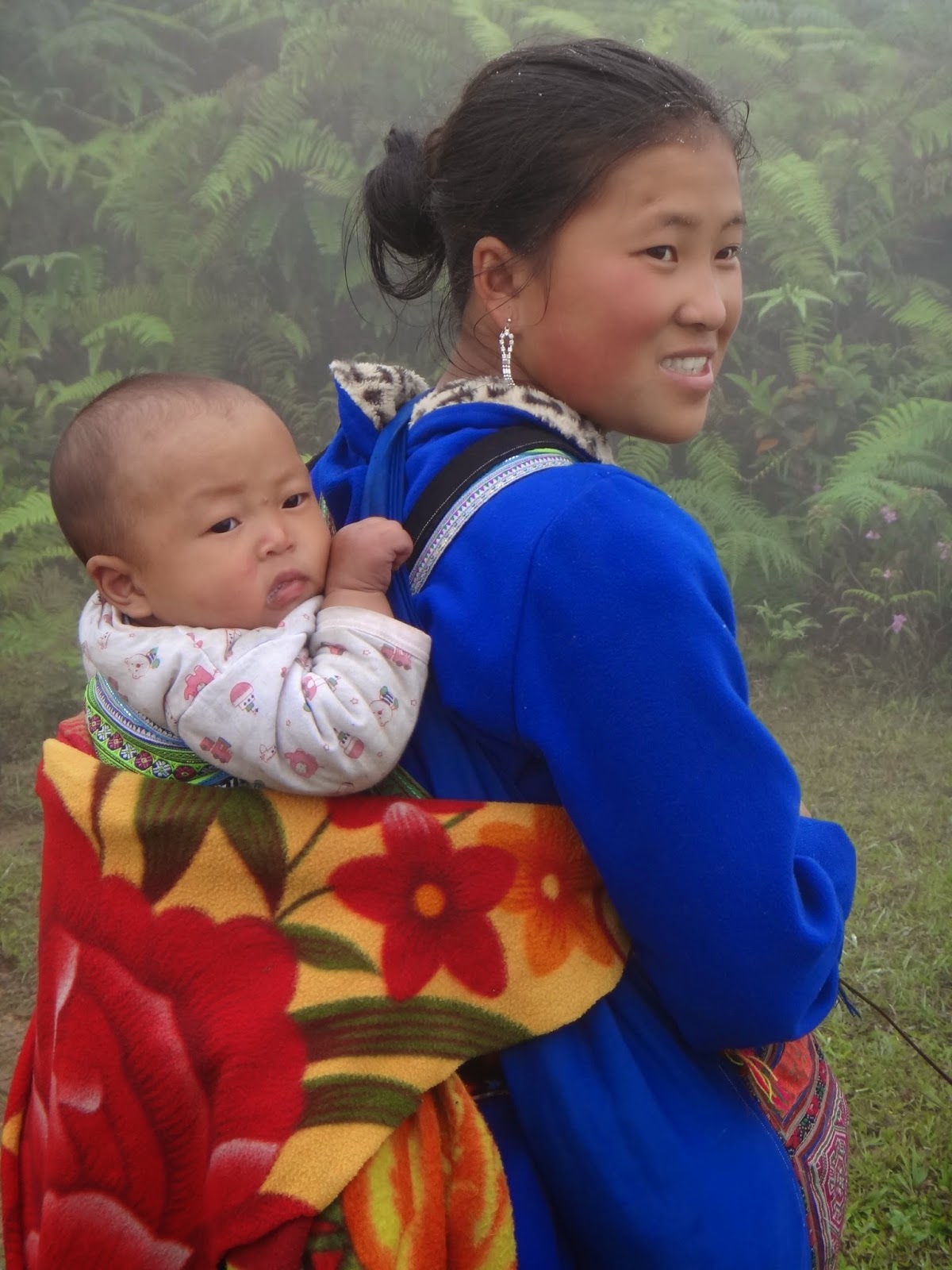
One of the young moms & their baby
A few stories stuck out to me. I was told one of the ladies trekking with us got married at 16, had a child by 17, and divorced shortly after as they didn't work out (apparently divorce is allowed in the tribes just like in western cultures). However, her ex-husband now lives in another village and doesn't take any responsibility over their child, so it is just up to her to raise her son up. Some of the village ladies actually have told her to sell her son so it's easier for her to support herself/re-marry, but she  said she would never do this (and how can any mom consider this?). Interestingly, it was also made known to me that one of the older ladies with a baby on her back (whom I assumed was her grandchild), actually bought this baby girl when she was born from another village as she always wanted a girl having had four grown sons now and not being able to have kids anymore. She saved up 5 million Dong (~$250 US) for this baby-crazy isn't it? I guess perhaps having lots of children is a safety net sort of thing that selling one off for money isn't unusual or as insane as it seems from a first world perspective. I felt more culture shock than I've ever been, the village way of life is so absurd from what I've been brought up with.

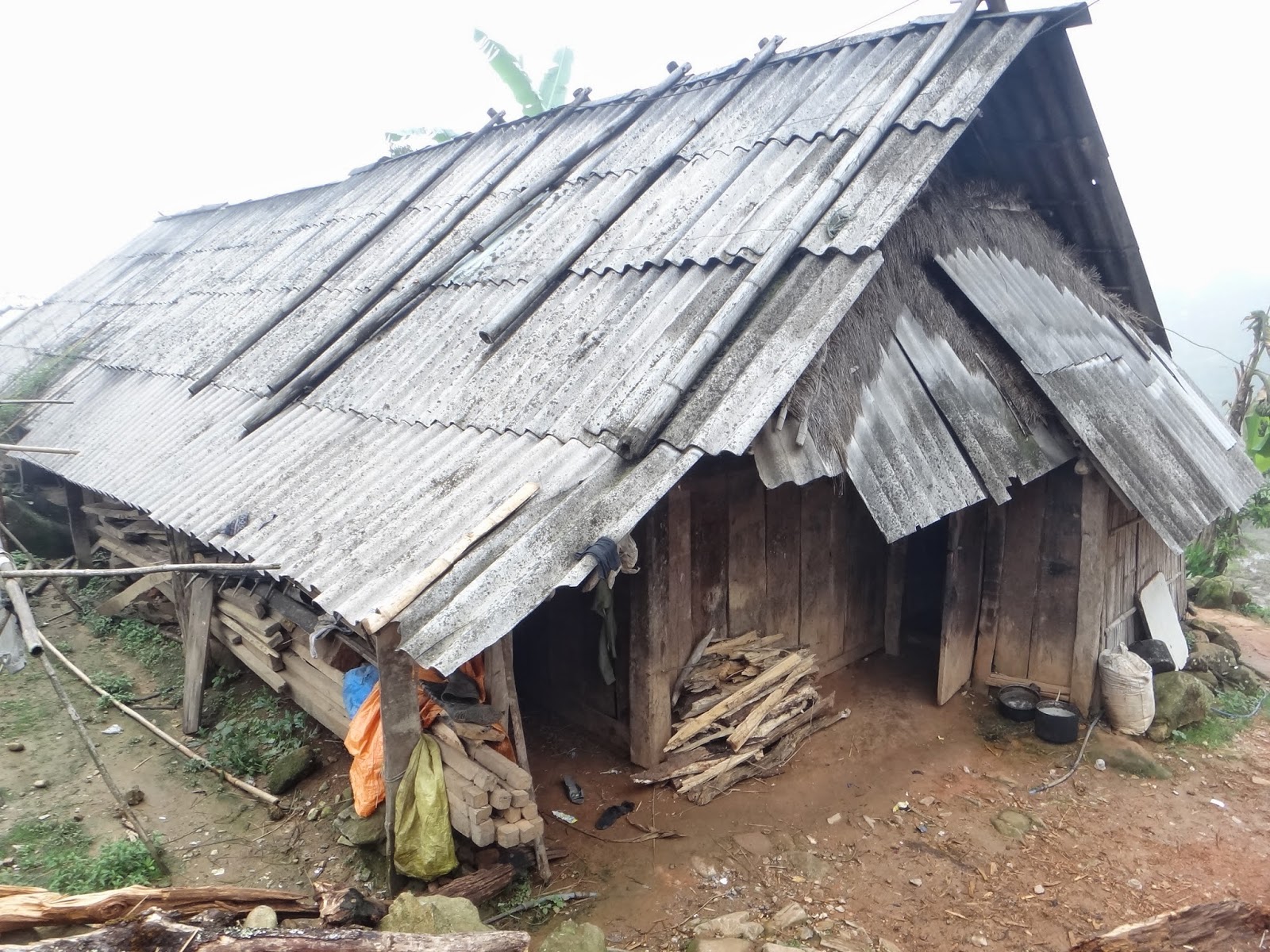
Lastly, I noticed in the villages that the husbands and children don't wear the traditional Black H'mong costumes. My tour guide told me because they don't want to nor have to as the villages are heavily westernized now and some of them even have cellphones and all. In fact, the ladies don't typically wear their costumes at home either, so it's mainly a tourist gig which is understandable as people do come  here to see these tribes and seeing them in the costumes makes it easy for them to be distinguish and also for them to sell their handicraft. Though I think it's quite sad really.
Sapa has taught me a lot about the beauty in the smallest things and come to appreciate all that  you have. If you are coming to Vietnam, do make a trip here, I guarantee you will see the world differently by the time you depart. When I was telling Mai I hope to see her in the future, she was so sweet and told me to bring my husband next time-it must be crazy to them that I'm 22 and not yet married. At this age, you're expected to have a kid already-say what?!

Sapa Day 1


I feel I am getting so cultured through this trip, and being in Sapa is no less if not even more of a cultural immersion. I enjoy the opportunities I get to talk to locals and its a bonus when they are able to communicate in English as that makes it easier for me to further my understanding and comprehension of their stories, backgrounds and lifestyle.

Taking the overnight train from central Hanoi (~9 hours) to Lao Cai and then transferring for an hour van ride to Sapa wasn't bad at all. Maybe I'm use to long commutes now, but it was a pretty smooth ride and another first to add to my list as I've never been on a sleeper train before. Either Vietnamese people are much more organized or this tour is worth its price because I felt way more on the same page than compared to my Indonesian train wreck of a tour. Our early morning arrival followed with breakfast and a time to freshen up (though you can't check in yet, the hotel (Sapa Summit Hotel) is smart to offer shower rooms for guests to use).

Our wonderful tour guide & I
At 10am, we started our 4km trek towards Cat Cat, Sin Chai Village where we saw the people of the Black H'mong Tribe weave and embroider clothes to be sold. It was so awesome to see them still use traditional weaving machine to weave hemp yarn into fabric, dye the lot of fabric by hand in indigo, and then sew them into various products (I am a textile student you know!). Fun fact of the day: marijuana is legal here and grown commonly here, though not for drugs, for clothes-it was so bizarre to us tourists how much "illegal" drugs were upon this beautiful land.


There are a total of six main tribes in Sapa and three main religions: Shaman is the main one (traditional beliefs) followed by Catholicism and to my surprise, Christianity as foreign missionaries have come here to evangelize and reach out to these people groups. I was also quite surprise that females typically get married by twenty if not younger and our tour guide (a female from the Black H'mong Tribe) shocked me when she said she had a 9 month old daughter at home as she was only twenty and looked too young to be a mom! Another difference from the western world is that usually the wives/moms work by giving English speaking trekking tours (they are educated up to highschool where they become fluent in English and Vietnamese) and make most of the handicraft to sell while the dads/husbands stay home to watch the kids or look after the animals they farm and usual village chores so to speak.
Amazing hand carved craftwork!

Some things I didn't know was that these tribes learn Vietnamese because though Sapa is in Vietnam, these tribes technically have Chinese roots and have ancestors from China. From the sharing of one kind lady, she said due to the war over 200 years ago, her ancestors fled China and settled in Sapa, which is not far from the Chinese border at all. Though, she said they don't really consider themselves Chinese anymore as their culture, way of life, and traditions have changed over time and as a tribe, they are so different from what others may define as Chinese.

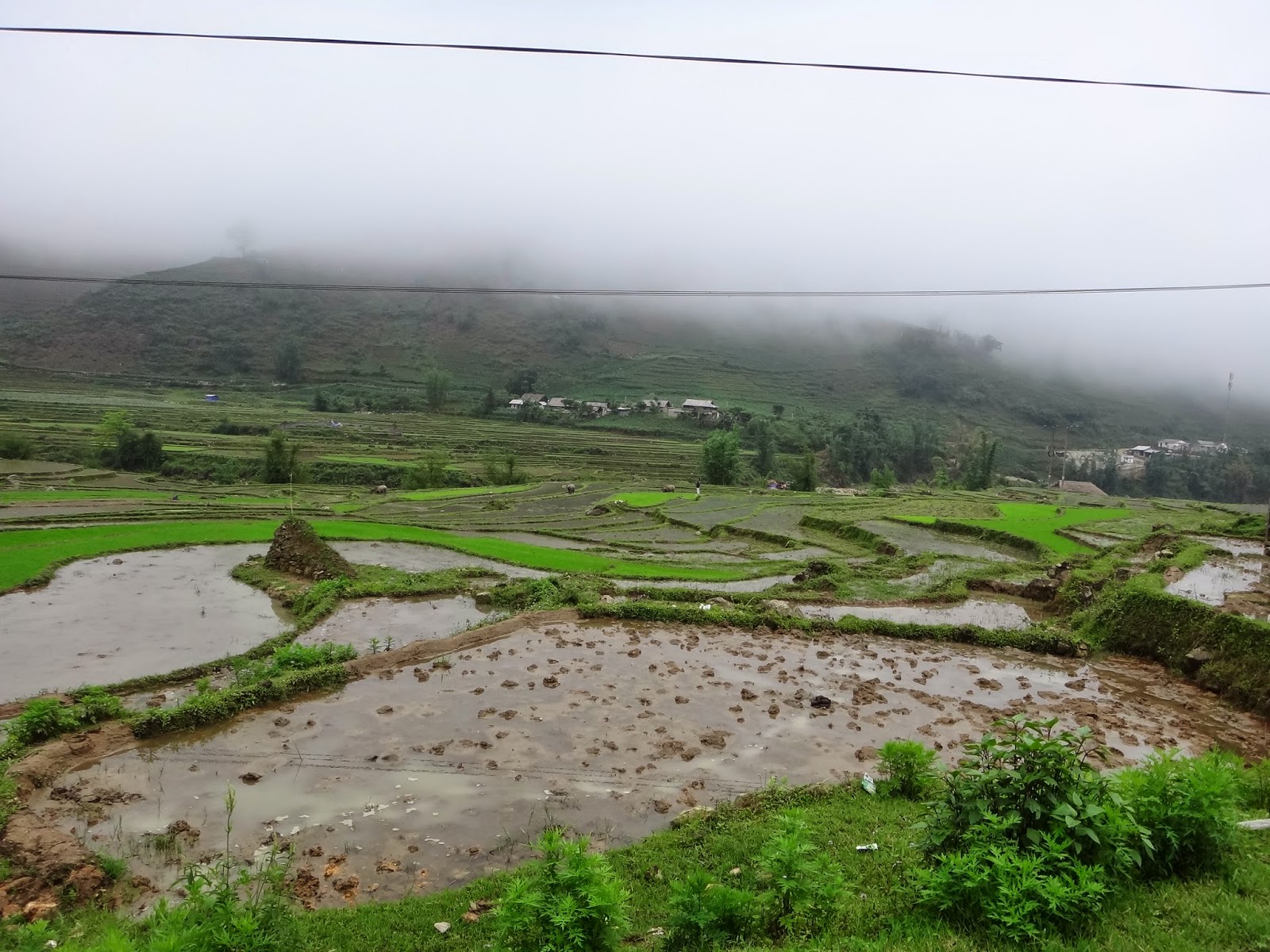
In terms of Sapa, the view is gorgeous! I hear people often say they would love to wake up to an ocean view, but I wouldn't mind waking up to the sight of these vibrant green pastures and highlands each day. I did come here thinking the tiered cuttings of the plantations and greens on these mountains were natural, but farmers actually dug them to be this way and maintained it over the years as it is easier for them to farm and trek up and down than on a completely steep hill. I just cant imagine how much work it must've took to dig such perfect looking strips of land when seen from afar. Its a beautiful work of art in its entirety and the fresh scent of air after rain and elevated atmosphere is like walking on clouds for the eyes.
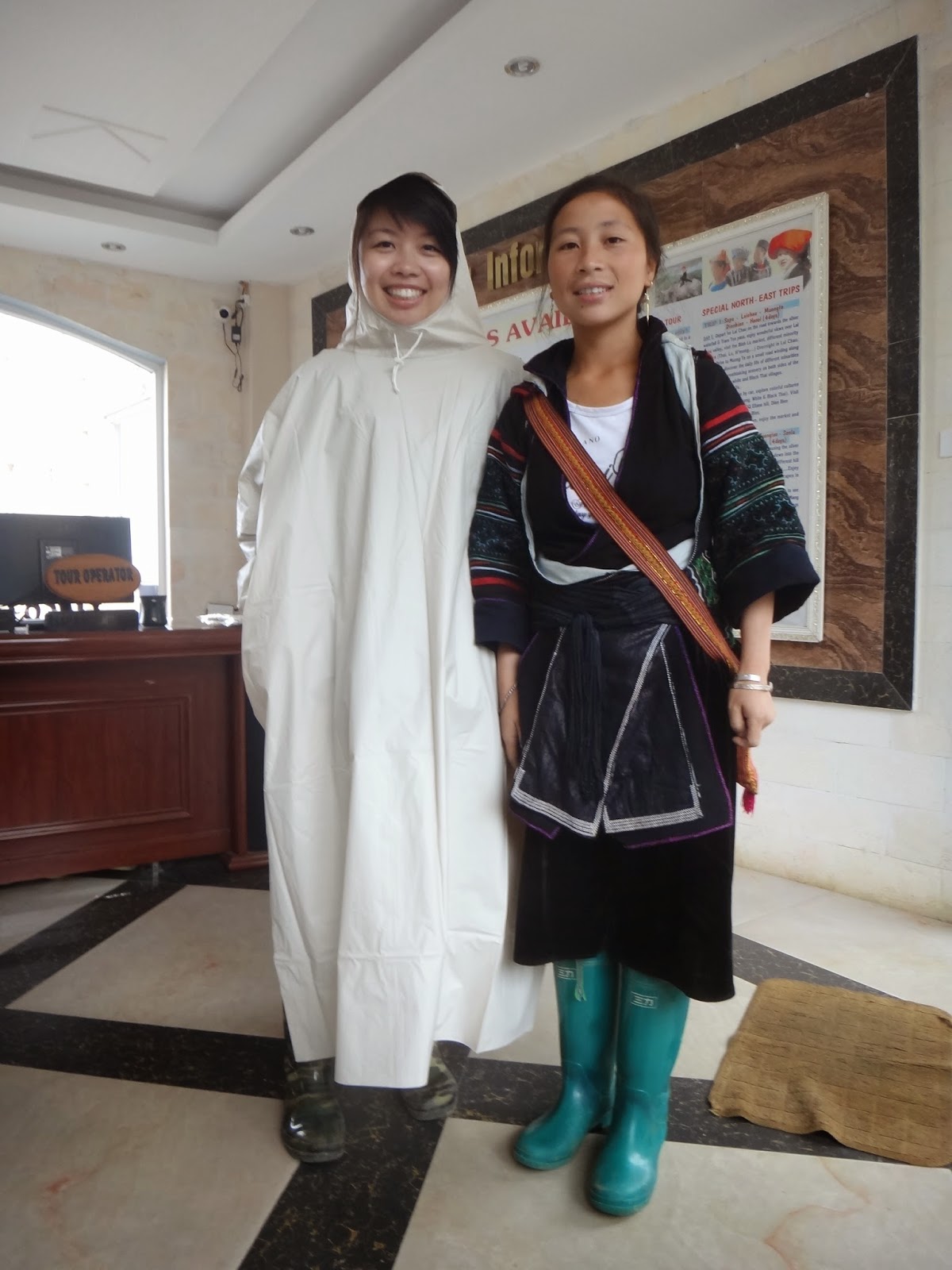
Sapa is cooler as it is in Northern Vietnam and higher elevated, but as it is a small 'town' they also don't have as much resources to keep places as warm as it is in bigger cities. Though, North Face and other outdoor sportswear brand are commonly sighted and sold, but the authenticity of these products is questionable. I highly recommend renting (can be done at your hotel or bought easily) rain boots and ponchos as rain makes the paths wet, slippery and muddy while having a poncho will keep you dry.
Lake Reflection in town of Sapa
I can't wait for day two of Sapa already so I can learn more! There is such beauty in the people, land, and conversations!